



Most people researching property in Indonesia start with Bali. They’ve heard the names — Canggu, Seminyak, Uluwatu — and they’ve seen the rental yield numbers. Then someone mentions Lombok, and the question starts: Is Bali still the right answer, or is there a better opportunity, a 25-minute flight east?
This Bali vs Lombok property investment guide gives you an honest comparison. Not marketing copy. Actual data on land prices, rental yields, legal structures, liquidity, and risk — so you can decide which island fits your goals in 2026.
The short answer first
Bali is a mature market with proven infrastructure, established rental demand, and high liquidity — but entry prices are significantly higher, and growth is moderating in many zones. Lombok is an earlier-stage market with lower entry prices, stronger appreciation potential, and government-backed infrastructure momentum — but less liquidity and more execution risk.
Neither is objectively better. They serve different investors at different stages. The question is which one you’re suited for.
Land prices the clearest difference
This is where the contrast is most stark.
In Bali’s established zones — Canggu, Seminyak, Uluwatu — prime land is trading at USD 300,000–500,000 per are (100sqm). Even secondary areas have moved well past USD 100,000 per are in recent years. The era of affordable Bali entry is largely over for individual investors without institutional budgets.
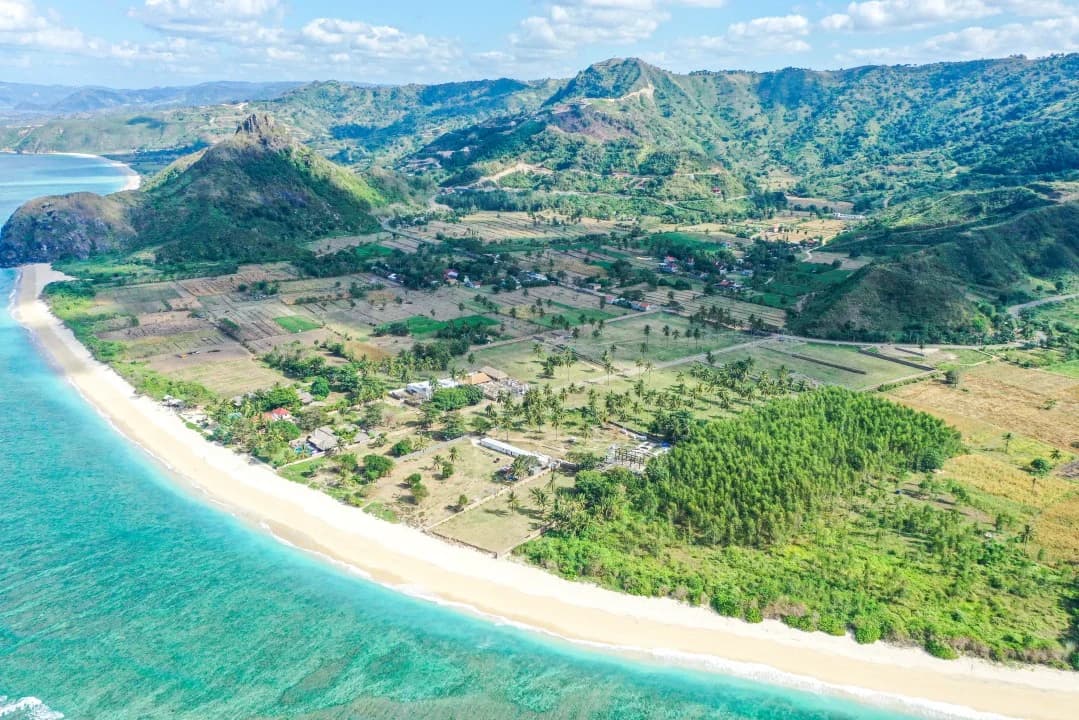
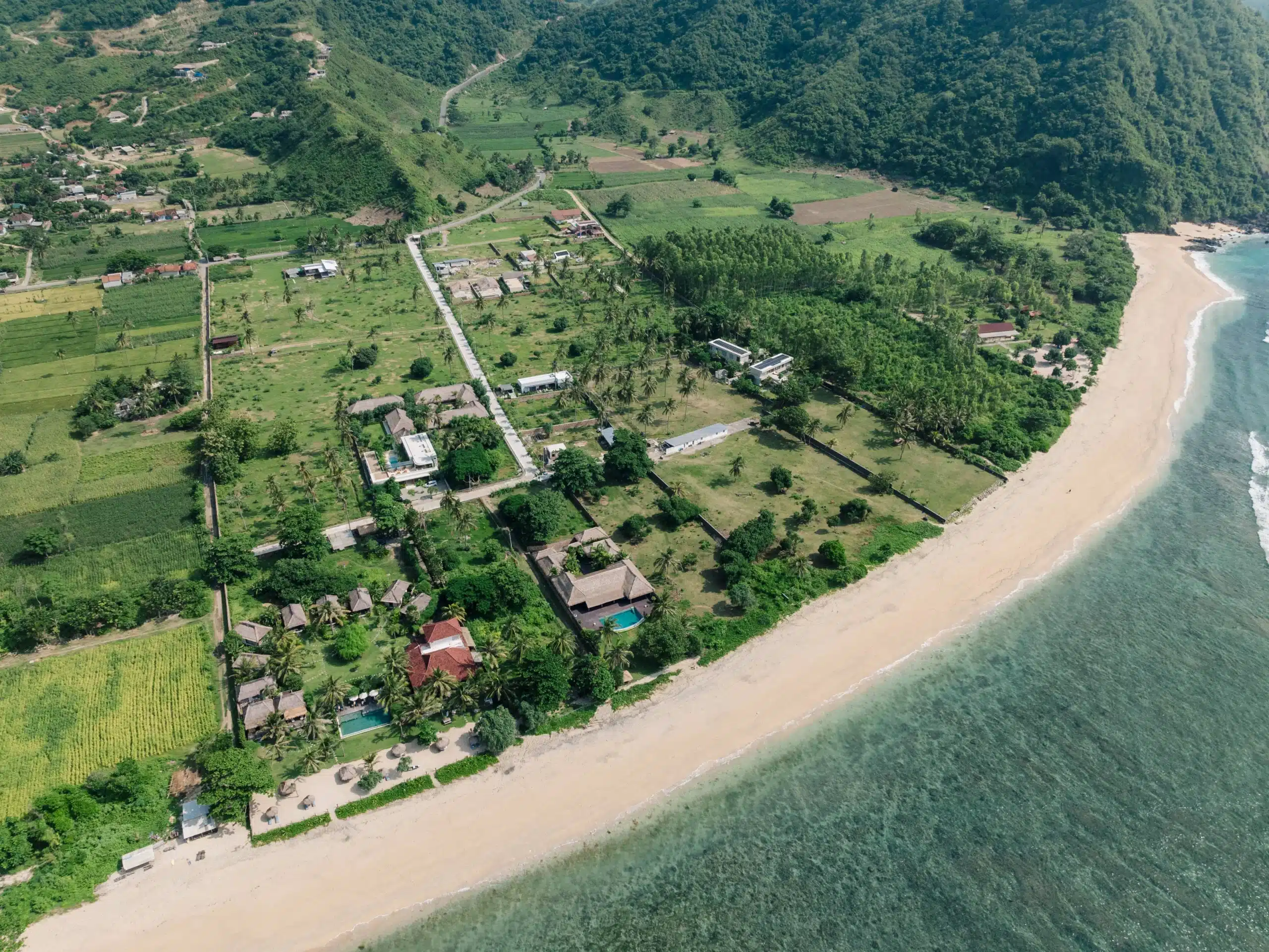
In South Lombok, land prices in 2026 range from:
- Kuta, Tampah, and Selong Belanak (most developed): USD 20,000–60,000 per are for well-located plots
- Are Guling, Serangan, Torok (emerging): USD 8,000–25,000 per are
- Bumbang and outer areas: USD 4,000–10,000 per are
That’s a 10x–50x price difference depending on the specific comparison. A plot that would cost USD 500,000 in Canggu might cost USD 30,000–50,000 in Kuta Lombok with a comparable sea view.
Lombok land has appreciated 30–50% in key South Lombok zones over the past three years. The trajectory is real — but prices remain well below Bali’s level, and the gap is still wide enough to matter for return calculations.
Rental yields: Closer than you’d expect
Bali’s reputation for rental income is earned. Well-managed villas in Seminyak, Canggu, and Uluwatu achieve occupancy of 70–80%+ with nightly rates that support strong annual yields. Experienced operators in prime locations report 10–18% annual ROI on total investment.
But the market has matured significantly. Oversupply in some zones — particularly central Canggu — has compressed yields. New builds are competing against an established inventory. The 20%+ yields that Bali commanded five years ago are no longer typical. Realistic yields in 2026 for a well-located new build are 10–15%, with higher numbers reserved for premium positions or exceptional management.
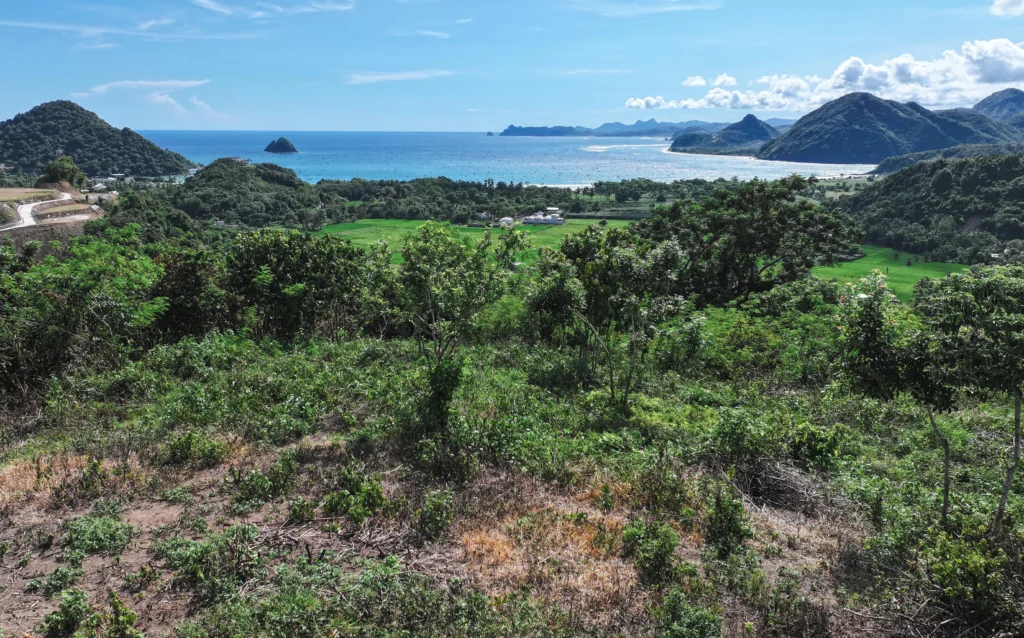
Lombok is closing the gap faster than most people expect. In 2024, the average nightly rate for mainland Lombok villas was USD 189 at 59% occupancy — generating meaningful annual income for well-positioned properties. Villas in Kuta and Selong Belanak with good design and active management are achieving 15–18% ROI on total development cost. That’s competitive with Bali — at a fraction of the entry price.
The key distinction: Lombok’s rental market is less liquid than Bali’s. Bali has a deep pool of established property managers, booking platforms, and repeat visitor traffic. Lombok is building this infrastructure, but it’s not as seamless yet. Good management makes a larger difference in Lombok than it does in Bali.

Legal structures – Same framework, different practice
The same Indonesian property law applies to both islands. Foreigners cannot own freehold land (Hak Milik) in their own name on either island. The available structures are identical:
Leasehold (Hak Sewa): The most common option. A notarised lease for an initial term of 25–30 years with extensions agreed in advance — total term typically 50–80 years. Widely used by foreign buyers on both islands.
PT PMA (Foreign-Owned Company): A foreign-owned Indonesian entity that holds land under HGB (Hak Guna Bangunan — right to build). More setup cost and complexity, but suitable for commercial projects, multiple properties, and larger developments.
Hak Pakai: Right of Use, available to foreigners with certain visa types. Less commonly used for investment property.
Where Bali and Lombok differ in practice:
- Bali’s zoning enforcement is more complex and more actively enforced. Many prime Bali areas have strict restrictions on villa density, building height, and tourist accommodation. Checking zoning compliance before purchase is non-negotiable in Bali.
- Lombok’s regulatory environment is simpler in most South Lombok zones, though this is changing as the market develops. PBG permits (the current building permit replacing the old IMB system) are required on both islands.
- Nominee structures (buying in an Indonesian citizen’s name) are illegal and legally insecure on both islands. If someone presents this as “standard practice,” that is a signal to pause.
Side-by-side Bali vs Lombok property comparison table
| Factor | Bali (Prime Zones) | Lombok (South Lombok) |
|---|---|---|
| Land price (prime) | USD 300K–500K+ per are | USD 25K–60K per are |
| Land price (emerging) | USD 100K–200K per are | USD 8K–25K per are |
| Price appreciation (3yr) | 5–15% annually (moderating) | 30–50% in key zones |
| Rental yield (new villa) | 10–18% (established zones) | 15–18% (well-located) |
| Avg nightly rate | USD 200–400 (Canggu/Seminyak) | USD 150–250 (Kuta/SB) |
| Avg occupancy | 70–80% | 55–65% (growing) |
| Liquidity (resale) | High — large buyer pool | Medium — smaller market |
| Infrastructure | Fully developed | Actively developing |
| Zoning complexity | High — strict enforcement | Medium — simpler currently |
| Legal framework | Same (Indonesian law) | Same (Indonesian law) |
| Airport connectivity | Excellent — 200+ routes | Good — growing routes |
| Investment horizon | 3–5 years realistic | 5–10 years recommended |
| Best for | Yield stability, faster exit | Appreciation, earlier entry |
| Market stage | Mature | Early-stage / growth |
The honest risk picture
Every market has risks. Here is the honest version for Bali vs Lombok property investment.
Bali risks in 2026:
- Oversupply in specific zones (central Canggu in particular) compressing yields
- Regulatory tightening on short-term rentals and unlicensed tourism operations
- High entry prices make the math harder for individual investors seeking meaningful returns
- Crowded resale market — standing out requires exceptional design or positioning
Lombok risks in 2026:
- Lower liquidity — finding a buyer at your target price may take longer than in Bali
- Infrastructure is still being built — some areas lack reliable road access, electricity, or water
- Due diligence is more complex — title clarity and zoning verification require experienced local advisors
- Less established rental management ecosystem — quality of operators varies significantly
The honest framing: Bali’s risks are the risks of a mature market. Lombok’s risks are the risks of an emerging one. Mature market risk means slower growth and margin compression. Emerging market risk means execution complexity and timeline uncertainty. Neither is categorically worse — they require different investor profiles.
Who should choose Bali?
Bali makes more sense if:
- You want the most liquid market with the clearest exit path
- You’re optimising for yield stability over appreciation potential
- You want access to a deep, established rental management ecosystem
- You have a shorter investment horizon (3–5 years)
- You’re buying a property primarily for personal use with investment as a secondary goal
- You have the capital for prime-zone entry (USD 500K+) and the margin works at that entry price
The investors who succeed in Bali in 2026 are those who are specific about location — not buying “Bali” generically, but identifying the micro-markets where supply is genuinely constrained and demand is structurally supported.
Who should choose Lombok?
Lombok makes more sense if:
- You’re optimising for capital appreciation over the next 5–10 years
- You want meaningful entry — a real position in a growing market — at a price that makes the return arithmetic work
- You’re comfortable with an emerging market and the due diligence that requires
- You want to build rather than buy ready — Lombok’s construction market is more accessible
- You’re interested in South Lombok specifically — Kuta, Selong Belanak, Are Guling, Serangan, Torok, Tampah — where we have on-the-ground market knowledge and verified listings
The investors who have benefited most from the South Lombok market are those who bought before the area they were looking at was fully developed. The buyers still waiting for the “right time” in Kuta in 2020 are now looking at Serangan. That dynamic hasn’t finished playing out.
What about both?
Some investors hold both. Bali for yield stability and an established asset; Lombok for appreciation exposure and earlier entry pricing. This approach treats them as complementary rather than competing — Bali as the defensive position, Lombok as the growth allocation.
If you’re in this category, the practical consideration is that managing assets on two islands requires two different networks — legal advisors, notaries, property managers. The operational complexity is real and should factor into your decision.
About Nour Estates
We are a South Lombok specialist. We give you the most accurate, on-the-ground picture of the South Lombok market — verified listings, honest due diligence, and AREBI guidance on every transaction.
If you’re asking the Bali vs Lombok question and leaning toward Lombok, or if you’re already decided and want to understand which South Lombok area fits your goals — we’re the right people to talk to.
Browse our current land and villa listings
Book a free consultation
Nour Estates | hello@nourestates.com | WhatsApp +62 853-3713-3898